How Writers Get Paid Without Writing the Full Book?

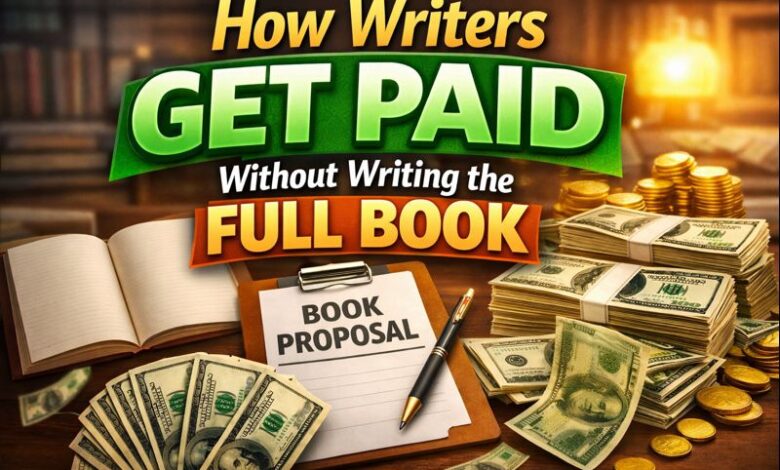
How Writers Get Paid Without Writing the Full Book
For many aspiring writers, earning money from a book feels overwhelming. The most common advice repeated everywhere is simple but discouraging: first write the entire book, then hope someone buys it. This belief alone stops thousands of talented writers from ever starting.
But the publishing industry—especially traditional non-fiction publishing—works very differently.
Many writers get paid before they write the full book.
This is not a shortcut, a scam, or a rare exception. It is a professional, widely accepted system used by experienced writers, journalists, consultants, coaches, and subject-matter experts. Publishers actually prefer this method because it reduces risk and increases the chances of success.
The Reality of Traditional Publishing
Publishing is a business. Every book represents a financial investment that includes editing, cover design, layout, printing, storage, distribution, marketing, and sales teams.
Most books are sold on consignment. This means bookstores can return unsold copies, which are often destroyed. When a book does not sell, the publisher loses money.
Because of this risk, publishers rarely want a completed manuscript from an unknown writer. Instead, they want to evaluate the idea before the book is written.
This evaluation is done through a book proposal.
What Is a Book Proposal?
A book proposal is a professional business document that sells your book idea. It is not a draft, not a summary, and not a rough outline.
Its job is to answer one key question:
Why should a publisher invest money in this book?
A strong proposal explains what the book is about, who will buy it, why it is needed now, how it compares to other books, and why you are the right person to write it.
If the publisher believes in the proposal, they offer a contract and an advance—before the book exists.
How Writers Get Paid Before Writing the Book
When a publisher accepts a proposal, they pay the author an advance.
An advance is upfront money paid against future royalties. It allows the writer to focus on writing without immediate financial pressure.
Advances are usually paid in stages:
- When the contract is signed
- When the manuscript is delivered
- When the book is published
The amount varies widely. Some advances are a few thousand dollars. Others reach tens of thousands, six figures, or more.
The key point is simple:
Writers are paid to write the book, not after it is finished.
Why Publishers Prefer Proposals Over Finished Manuscripts
1. Lower Financial Risk
A proposal allows publishers to shape the book early. They can adjust positioning, audience focus, and marketing strategy before spending large amounts of money.
2. Proof of Market Demand
A proposal shows research. It proves there is an audience and that similar books already sell. Competition is a good sign—it means people are buying.
3. Authors as Business Partners
Publishers want authors who understand promotion and audience engagement. A proposal shows whether the writer is prepared to help sell the book.
What a Strong Book Proposal Includes
Book Overview
This section explains the core idea, the problem the book solves, and the transformation the reader will experience.
Target Audience
Publishers want clarity. A strong proposal defines exactly who will buy the book and why.
Market and Competition Analysis
This section lists similar books and explains how your book is different, better, or more relevant.
Author Platform and Credibility
You do not need to be famous. You need relevant experience, authority, or access to a focused audience.
Chapter-by-Chapter Outline
This shows that the idea can sustain a full-length book and that the content is logically structured.
Sample Chapter
Usually one complete chapter that demonstrates writing quality, clarity, and depth.
Why This Method Is Faster and Smarter
Writing a full book without a deal can take years. Many writers never finish.
A proposal can be written in weeks. Instead of guessing, the writer tests the idea early and gets professional validation.
This approach saves time, energy, and emotional burnout.
Who This Strategy Works Best For
- Non-fiction writers
- Coaches and consultants
- Educators and trainers
- Journalists and researchers
- Professionals with real-world experience
- People with strong personal stories
Non-fiction publishing is idea-driven, which is why proposals are the preferred path.
Common Myths About Getting Paid to Write
- Myth: Only famous writers get advances.
Truth: Unknown writers get advances every day. - Myth: You must write the book first to be taken seriously.
Truth: Publishers respect strategy, not struggle. - Myth: Proposals limit creativity.
Truth: They focus creativity on what readers want.
The Mindset Shift Writers Must Make
Successful writers think like professionals. They understand that writing is both creative and commercial.
A proposal does not reduce creativity. It protects it by ensuring the book has a real audience.
traditional publishing advances
how book proposals work
Final Thoughts
You do not need to write hundreds of pages to earn as a writer. You need a strong idea, a clear audience, and a smart proposal.
Understanding how writers get paid without writing the full book turns writing from a gamble into a strategy.
Smart writers don’t just write books. They sell ideas.
And that is how many writers get paid—long before the final chapter is written.